


School of Veterinary Medicine
Veterinarian Training Program Description
The Veterinarian Training Program at the Agricultural University of Georgia consists of 60 ECTS and is an educational program developed according to relevant standards, independent of the Veterinary Integrated Master's Program.
Individuals with a bachelor's degree in the field or specialty of veterinary medicine are eligible to enroll in the Veterinarian Training Program.
The program includes subjects such as Animal Necropsy and Forensic Medicine, Veterinary Microbiology and Infectious Diseases, Surgery, Internal Medicine, Obstetrics and Reproductive Diseases, Parasitic Diseases, Veterinary Legislation, Food Safety for Veterinarians, Epidemiology and Public Healthcare, Laboratory Medicine.
Each student independently prepares a course paper, researching a current issue in the field under the supervision of a faculty member. This provides an opportunity for students to familiarize themselves with current research methods and the latest achievements in the field.
Upon completing the program, a veterinarian's certificate is issued, granting the individual the right to pursue doctoral studies in veterinary medicine and to work in state and private veterinary institutions.
Action-Based Learning
The program includes laboratory and practical studies. These studies are conducted using the learning-by-doing method, meaning that students learn the profession through individual work and perform tasks, tests, and analysis hands-on. Additionally, during laboratory sessions, student groups do not exceed 20 people, positively impacting student learning outcomes.
Areas of Employment
After completing the program, graduates may be employed in a variety of positions in various organizations, including:
- Veterinary clinics and laboratories
- Livestock and poultry farms, beekeeping, and fishing farms
- Pharmaceutical enterprises and veterinary pharmacies
- Pet stores, zoos, vivariums, aquariums, terrariums, racetracks, and animal shelters
- Scientific-research and educational institutions
- International projects
Curriculum
The Veterinarian Training Program at the Agricultural University of Georgia consists of 60 ECTS. The program encompasses subjects such as Animal Necropsy and Forensic Medicine, Veterinary Microbiology and Infectious Diseases, Surgery, Internal Medicine, Obstetrics and Reproductive Diseases, Parasitic Diseases, Veterinary Legislation, Food Safety for Veterinarians, Epidemiology and Public Healthcare, Laboratory Medicine.
The program also includes field practice, during which students gain experience at various veterinary medicine organizations. At the end of each semester, students are required to prepare a brief report detailing their practical work and how they applied the knowledge and skills acquired at the university in different scenarios.
Additionally, each student independently prepares a course paper, conducting research on a current issue in the field under the guidance of a supervisor. This allows students to become familiar with contemporary research methods and the latest advancements in the field.

Admission
To be eligible for the Veterinary Training Program at the Agricultural University of Georgia, candidates must hold a bachelor's degree in the field or specialty of veterinary medicine. Interested applicants should:
- Submit their application and required documents to the university.
- Successfully pass an intra-university interview.
Documents
Applicants for the Veterinary Training Program must provide the following documents:
- A copy of their identity card
- A copy of their bachelor's degree or a relevant certificate in veterinary medicine
- An electronic version of their photo
A copy of their military registration certificate (if applicable)
About the school
The Agricultural University of Georgia School of Veterinary Medicine offers 3 accredited programs:
- Integrated Master's Program in Veterinary Medicine
- Veterinarian Training Program
- PhD Program in Veterinary Medicine
School of Veterinary Medicine programs are rich with laboratory and hands-on learning. Laboratory and practical studies are conducted using the learning-by-doing method, which means that students learn the profession through individual work, performing tasks, tests, and analysis independently. Additionally, student groups for laboratory studies are kept small, not exceeding 20 people, which in turn positively impacts student learning outcomes.
Students are provided laboratory/practical studies in teaching laboratories for physics, chemistry, biology, microbiology, veterinary medicine, and other areas located at Kakha Bendukidze Campus.
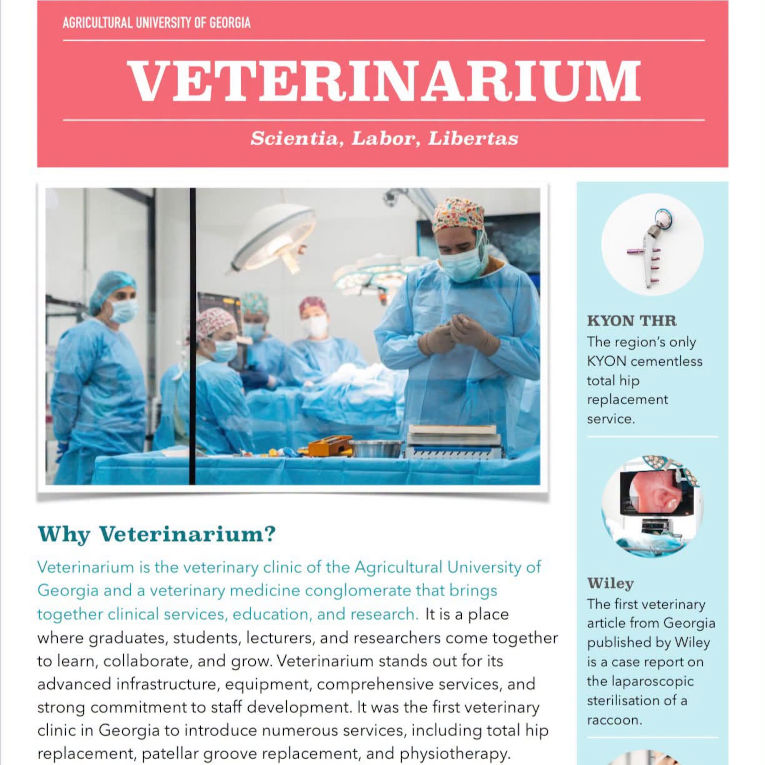
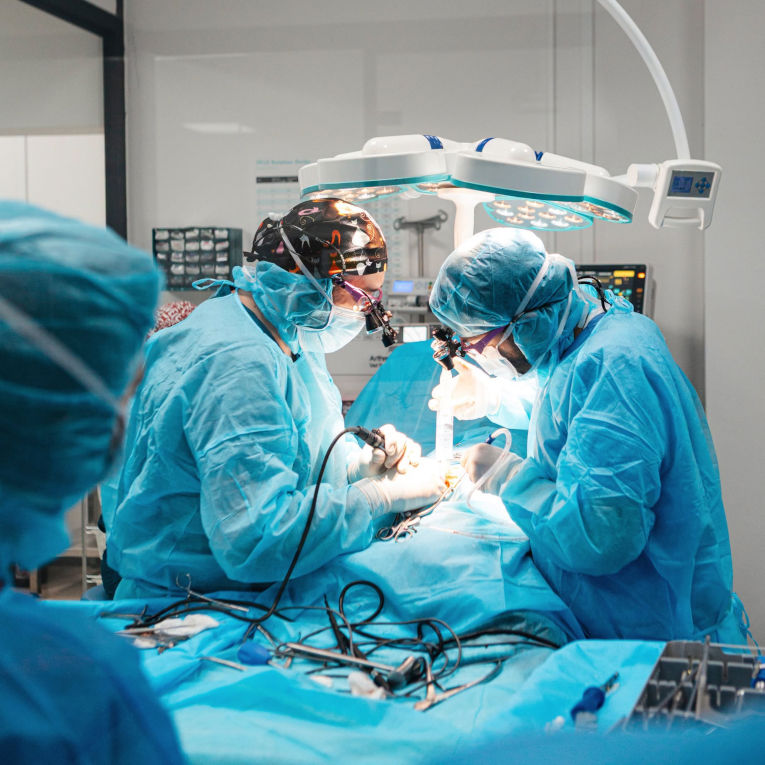
The Agricultural University of Georgia has a veterinary clinic where students of the School of Veterinary Medicine have practical lessons, enabling them to develop essential veterinary skills in a real working environment.
Furthermore, many of the school's faculty are directly and actively involved in research, including significant international projects, within the infrastructure of scientific institutes of the Agricultural University of Georgia. This provides students with the opportunity to engage in scientific research if so desired. For PhD students, it offers an excellent opportunity to conduct in-depth research with experienced researchers.
Dean

Besarion Lasareishvili
Professor; Dean of the School of Veterinary Medicine
Coordinator